Monday, June 14, 2010

The Moon Book by Gail Gibbons

The Moon Book
By Gail Gibbons

Summary: The Moon Book by Gail Gibbons describes the moon phases, its revolution around the earth, and how we study the moon. The book uses bright pictures and clear language to describe where the moon gets it light from. The author also details the history of travel to the moon. The Moon Book is an excellent resource to help explain the relationship between the moon, sun, and earth. At the end of the book, the author also lists major milestones, stories, and other important facts about the moon.

SC Science Standards: 4-3: The student will demonstrate an understanding of the properties, movements, and locations of objects in the solar system. (Earth Science)
Indicator: 4-3.6 Illustrate the phases of the Moon and the Moon’s effect on ocean tides.

SC ELA Standards: 4-2 The student will read and comprehend a variety of informational texts in print and non print formats.
Indicators: 4-2.6 Use graphic features (including illustrations, graphs, charts, maps, diagrams, and graphic organizers) as sources of information.


Activity/Lesson: The teacher will use this book to introduce the phases of the moon. The text will be used to introduce the new topic and peak the interest of the students. After reading the book, the students will complete a moon phase graphic organizer each night at home for a complete cycle of the moon.


Objective:
  • The students will illustrate the phases of the moon

Materials:

  • The Moon Book
  • Moon phase graphic organizer
  • Smartboard presentation about phases of the moon

Procedures:

  • The teacher will start the lesson on Moon Phases by reading the book The Moon Book.
  • The teacher will ask the students if they have ever noticed how the moon changes and ask the students whey they think this happens
  • The teacher will discuss the different phases of the moon as well as the movement of the moon in relation to the sun and earth through a smartboard presentation.
  • After the presentation, the students will be given a graphic organizer to fill out each night with the help of their parents. The students will draw the moon and write a brief description of the changes that took place from the previous night.
  • At the end of the cycle the students will hand in their graphic organizers to the teacher

Follow up activity: The students will look at a lunar calendar and look up their birthdays and locate the moon phase for their birthday. The students will draw the moon phase for their birthdays.

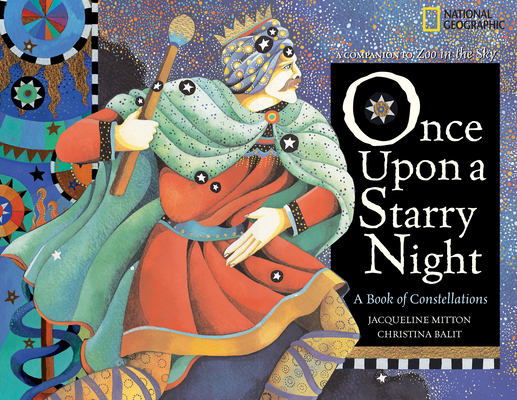


Once Upon a Starry Night
by Jacqueline Mitton and Christina Balit


Summary: Once Upon a Starry Night explains ten widely known constellations. The book takes the reader on a vivid journey of the night sky. The author compares the night sky to a vast picture book and says that the sky is filled with kings, queens, gods, heroes, and mythical creatures. The ten constellations that are portrayed in this book include: Cassiopeia, Andromeda, Perseus, Pegasus, Lyra, Hercules, Orion, Centaurus, Ophiuchus, and Argo. The author details the myths behind each constellation. The pictures are colorful and rich. The book also offers a map of the night sky.


SC Science Standard: 4-3 The student will demonstrate an understanding of the properties, movements, and locations of objects in the solar system. (Earth Science)
SC ELA Standard: 4-6 The student will access and use information from a variety of sources.
Indicator: 4-6.4 Paraphrase research information accurately and meaningfully.


Activity/Lesson: After the teacher reads the book aloud, the students will work in groups to research their assigned constellation. The students will draw and prepare a presentation on their constellations to the class. After all of the groups have completed their drawings the teacher will put together all of the constellations and create a class map of the nights sky.

Objectives:
  • The student will identify the properties of an assigned constellation.
  • The student will illustrate an assigned constellation.
  • The student will orally present a minimum of 5 facts about an assigned constellation to the class

Materials:

  • Once Upon A Starry Night
  • Black poster board
  • white crayons
  • gold star stickers
  • computers and additional reference texts for the students to use for research.

Procedure:

  1. The teacher will aks the students if they know what constellations are and if so which ones have they heard of.
  2. The teacher will also ask the students what a myth is and any examples they may know.
  3. Next the teacher will read Once Upon a Starry Night
  4. The teacher will break the class into 10 groups, assigning one of the ten constellations from the book to each group.
  5. Each group with research their constellation and draw on black chart paper using white crayons and star stickers.
  6. The groups will prepare a short oral presentation on their constellations and present to the class.
  7. The teacher will put together all of the constellation to make a map of the nights sky on the ceiling.

Sunday, June 13, 2010

Galaxies, Galaxies by Gail Gibbons


Galaxies, Galaxies!
By Gail Gibbons


Summary: Galaxies, Galaxies explains in a simple and clear way the Milky Way and different types of galaxies. The book uses understandable language as well as colorful illustrations to hold the readers attention. The book begins with an explanation of the Milky Way and then moves into the different types of galaxies. The book also touches on stars, gravity, different types of telescopes, the history of space.

SC Science Standard: 4-3: The student will demonstrate an understanding of the properties, movements, and locations of objects in the solar system. (Earth Science)
SC ELA Standard: 4-6 The student will access and use information from a variety of sources.
Indicator: 4-6.3 Organize information by classifying or sequencing.


Activity/Lesson: The teacher will use the text to introduce Galaxies. The book will be used to engage the students interest and provide information on the different types of galaxies. After the read aloud, the students will work in groups to sort a set of galaxy images (one set of 20 per 4-6 students).

Objective:
  • The Student will identify the parts of a galaxy
  • The student will identify the different types of galaxies
  • The student will compare and contrast the different properties of galaxies
  • The student will sort images based on properties

Materials:

  • Galaxies, Galaxies!
  • overhead projector
  • 20 images of galaxies per group

Procedure:

  1. The teacher will briefly discuss with the students what a galaxy is, mentioning that it contains billions of stars bound together by their mutual gravity and that our Sun is just one of over a hundred billion stars that makes up our Milky Way Galaxy.
  2. The teacher will give each group a set of 20 photographs of different galaxies.
  3. The students will come up with categories to classify the photographs based on the traits. (at this point do not provide answers to the students let them come up with their own classification schemes)
  4. Once all groups have finished classifying their photos, choose a few groups to explain how they sorted their photos. Ask the groups to explain how the galaxies are different.
  5. The teacher will then read Galaxies, Galaxies!
  6. After the book, the teacher will review the different type of galaxy discussed in the text.
  7. Afterwards the students will review their categories of photos and make any changes necessary based on the information from the text and the class discussion.
  8. The students will write down how they classified each photograph according to the type of galaxy.

Follow up Activity: Discuss the Hubble's galaxy classification system and have students sort the same 20 photos based on that scheme.

The Way Back Home by Oliver Jeffers


The Way Back Home
By Oliver Jeffers


Summary: This book tells the story of a boy who finds himself stuck on the moon. Not only does he find himself stuck on the moon by also that he is not alone. The story begins with a boy flying his plane higher and higher into the sky when suddenly he runs out of fuel and lands on the moon. Meanwhile another part of the moon a martian crashes his space ship. Eventually as their eyes adjust to the darkness they find one another. The book details their adventures together and their journey back home. The book is creative and filled with vivid illustrations.


SC Science Standard: 4-3: The student will demonstrate an understanding of the properties, movements, and locations of objects in the solar system. (Earth Science)
Indicator: 4-3.2 Compare the properties (including the type of surface and atmosphere) and the location of Earth to the Sun, which is a star, and the Moon.
SC ELA Standard: 4-5 The student will write for a variety of purposes and audiences
Indicator: 4-5.2 Create narratives containing details and a sequence of events that develop a plot.

Lesson/Activity: The teacher will use this text towards the end of the Astronomy unit to assess what the students have learned while allowing the students to exercise their creativeness. The teacher will read aloud the text up to the point where the martian and the boy bump into one another on the moon. The teacher will instruct the students to write their own version of the boy and Martians adventures and illustrate their story. The students must use accurate facts and illustration about the solar system that they have studied throughout the unit. The students will share with their stories with the class.


Objectives:

  • The student will recall the different properties and objects in our solar system.
  • The student will rewrite the end of the book The Way Back Home.

Materials:

  • The Way Back Home
  • Paper
  • Markers

Procedures:


  1. The teacher will review important facts that the class has covered during the Astronomy unit.
  2. The teacher will read the story The Way Back Home up to the point where the Martian and Boy meet on the moon.
  3. The students will then complete their own version of the story with illustrations. The students must use accurate facts that they have learned during the Astronomy unit.
  4. The students will share their stories with the class
  5. The teacher will finish reading the story after all students have finished their stories.
  6. The teacher will review the facts that the students used in their writings.


Astronomy Out of This World by Basher and Green

Astronomy Out of This World!
Created by Basher and Written by Dan Green


Summary: Astronomy Out of This World gives details about the Sun, the Solar System, black holes, stars, planets and many other features of our solar system. The author uses first person to help the reader relate to each celestial body. The book uses comic like illustrations to grab the readers' attention. Each page contains several facts and an illustration. The book begins with the sun and the planets then ends with dark energy and space-time. A few topics may be difficult for a fourth grader to fully comprehend on their own and may require scaffolding from the teacher. Overall the book is well organized and visually appealing.


SC Science Standard: 4-3 The student will demonstrate an understanding of the properties, movements, and locations of objects in the solar system. (Earth Science)
Indicator: 4-3.2 Compare the properties (including the type of surface and atmosphere) and the location of Earth to the Sun, which is a star, and the Moon.
SC ELA Standard: 4-2 The student will read and comprehend a variety of informational texts in print and nonprint formats.
Indicator: 4-2.6 Use graphic features (including illustrations, graphs, charts, maps, diagrams, and graphic organizers) as sources of information.

Lesson/Activity: The teacher will use this text in one of the centers for the Astronomy
my unit. The students at this center will choose two celestial bodies (that have not been chosen by other groups) and create a Venn diagram, as a group. The students will use chart paper to create their Venn diagrams and each group will display their diagram on the walls for the other students to read.


Objectives:
  • The student will identify important properties of two celestial bodies.
  • The student will compare and contrast the properties of the two celestial bodies
  • The students will correctly complete a Venn Diagram on their chosen celestial bodies.

Materials:
  • Astronomy Out of This World!
  • Chart paper
  • markers
Procedure:
  1. The teacher will break the class into their center groups.
  2. The students in center #1 will read aloud the introduction chapter of the text
  3. Next the students will look through the table of contents and choose two celestial bodies that have not been chose by other groups.
  4. The students will read aloud in their groups the sections for each of their chosen celestial bodies.
  5. The students will use chart paper and markers to create a group Venn Diagram comparing and contrasting their chosen celestial bodies. The Venn diagram must contain at least three comparisons.
  6. The students will display their Venn Diagrams on the wall.
  7. The class will discuss each Venn diagram after all groups have completed that center.

There's No Place Like Space! by Tish Rabe

There's No Place Like Space!
By Tish Rabe
Illustrated by Aristides Ruiz


Summary: In the book There is No Place Like Space: All About our Solar System, the Cat in the Hat takes the reader on a journey through our solar system. The book introduces the eight planets and their attributes. The book also explains other important facts about the solar system such as the location of the sun and the planets. The author uses catchy rhymes to introduce learning about the planets, stars, the moon, constellations, and the sun in a fun and interesting way. The book contains colorful and eye catching illustrations.

SC Science Standard: 4-3 The student will demonstrate an understanding of the properties,movements, and locations of objects in the solar system. (Earth Science)
Indicator: 4-3.2 Compare the properties (including the type of surface and atmosphere) and the location of Earth to the Sun, which is a star, and the Moon.

SC ELA Standard: 4-2 The student will read and comprehend a variety of informational texts in print and non print formats.
Indictor: 4-2.6 Use graphic features (including illustrations, graphs, charts, maps, diagrams, and graphic organizers) as sources of information.

Lesson/Activity: The teacher will use There's No Place Like Space at the beginning of the Astronomy Unit. The book will be used to engage the students and activate prior knowledge. The teacher will read aloud the book to the students. As a class the students will complete a KWL chart. After the class has completed the KWL chart, each student will choose one of the planets, a constellation, the sun, or the moon from the book and write a poem about that fact.


Objectives:
  • The student will recall the properties of the eight planets, the sun, and the moon.
  • The student will create a poem about one or more facts from the text.

Materials:

  • There is No Place Like Space: All About our Solar System
  • KWL chart

Procedures:

  1. The teacher will activate the student' prior knowledge by questioning the students about the solar system ( fill in -what I know column on KWL chart.)
  2. The teacher will ask the students what they would like to learn about the solar system (what I want to learn on KWL chart)
  3. The teacher will read aloud the text There is No Place Like Space: All About our Solar System to engage and activate prior knowledge.
  4. The teacher will stop after each planet is introduced and recall the important properties.
  5. The students will compete the KWL chart (what I learned column)
  6. The students will choose a topic from the text and create a poem to be turned in at the end of the class.